


I hope I don’t have to convince you that the rigmarole of changing our clocks twice a year should end. It’s self-evidently terrible.
This post isn’t just stating that daylight savings should end (of course it should), I’m also arguing that Ireland has a once-in-a-generation chance to move Europe 1 hour closer to the US, permanently, which will have a whole heap of benefits.

Daylight savings time causes nothing but grief. It gives teenagers a week of terrible sleep, causes the rate of heart attacks to spike, and is the bane of parents of young kids everywhere.
The dream scenario here is to not only end the seasonal time change, but to do so in a way that leaves us permanently 1 hour closer to the US. This plan, however, has 2 big challenges:
Ireland will not only have to end the clock change on Wintertime, but will also have to convince the rest of the EU to move with us.
The US will have to be convinced to move permanently to Summertime, which is the less desirable place to end up.
Luckily, we are currently in a narrow window of time where both obstacles are surprisingly surmountable.
I’ll explain how each is ready to be overcome in a sec, but first let me briefly explain the benefits of this plan.
Shrinking The Atlantic

If you are not one of the quarter of a million Irish people employed by a US company, let me tell you what a typical day in one of their “laptop jobs” looks like.
Once the dust settled after COVID, your company instituted an RTO (Return to Office) Policy, so you are no longer making video calls with people in the US from home. Instead you commute into the office several days per week, so that you can sit in a meeting room and make the video calls from there.
Unlike other laptop jobs, however, you can’t evenly space these meetings throughout the day, because you have to squish them into the time between when the Americans wake up and when you need to log off to collect the kids and start the dinner.
If you are in Pharma or Finance, this isn’t too terrible, as most of your Americans are on the East Coast, but if you’re in tech and HQ is in California, things get very tight. A gracious Californian will schedule a call for 8am, which is your 4pm. You ideally want to wrap by 6pm. That’s a 2 hour window to find a slot that works for everyone needed on the call.
It sucks, but it’s actually much better for you than your continental European colleagues. In Paris and Berlin, even though they’re only one hour ahead, they have only half the available number of crossover hours in which to find a slot.
There is a genuine economic cost to this. I know that the multinationals often headquarter here for tax purposes, but it’s not mandatory that they also build big teams (of well paid jobs) here. They do so because it’s easy to attract great talent here, but also because Ireland is accessible to HQ in the US. There are more direct flights. Everyone speaks English and yes, there is more crossover in the timezones.
We can compound this advantage. Moving us 1 hour closer will increase our overlap with California by 50%!
It’s Not Just The Economy
Now I know what you might be thinking. “Great economic benefits? Really Peter? Or is this mostly motivated by the fact that your small child now wakes up even earlier this week?”
Out of fear that you might be right… I’m going to double down.
In addition to the benefit to the transatlantic worker, there is also a geopolitical benefit. At a time when the US is becoming more isolationist and pulling away from Europe, having more overlap in our timezones can help to bring us closer, and potentially reverse some of that drift. Jet lag will be eased, which will make flights easier for tourists, business travellers and even diplomatic visits.
More of us can watch the Super Bowl. More of them can watch the Champions League.
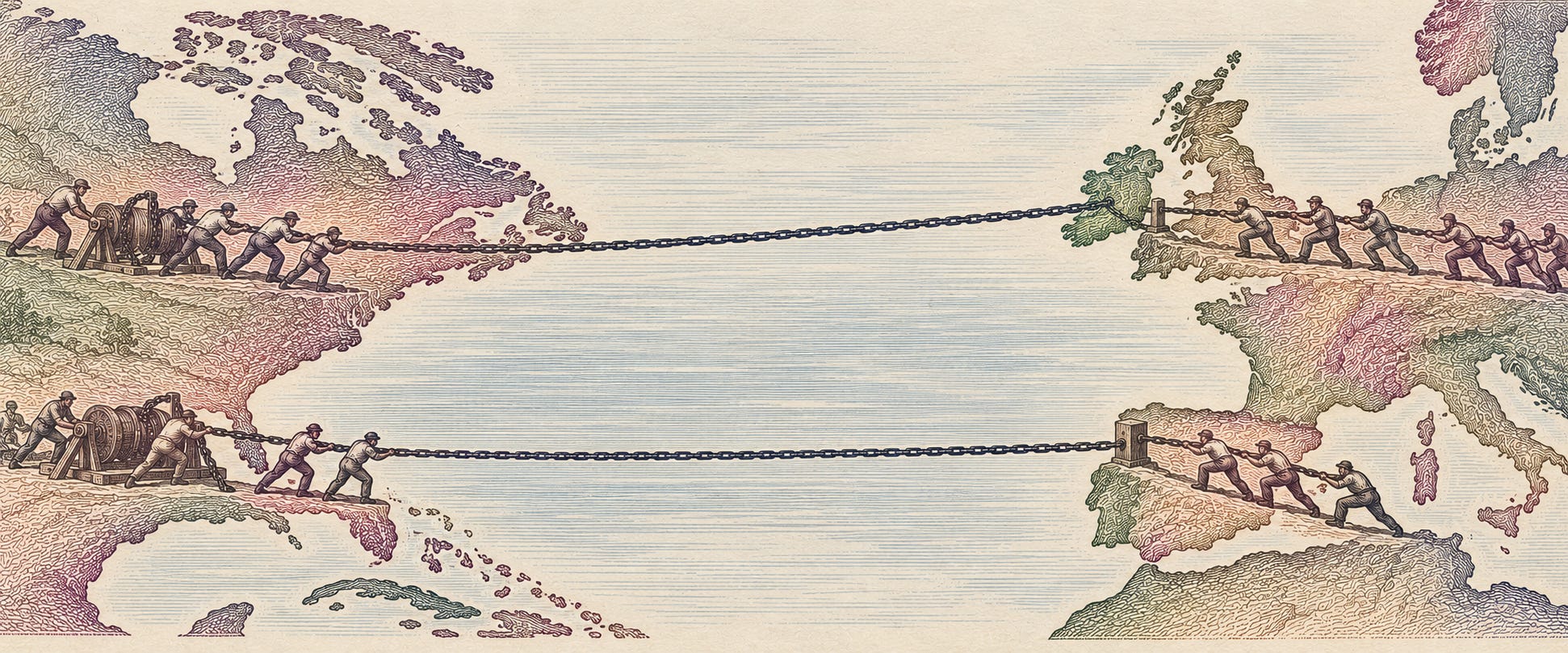
Hopefully I have convinced you of some of the merits of closing the timezone gap - even if you only go as far as agreeing that, if we’re going to end daylight savings anyway, we might as well aim to do it this way.
So let’s now return to the two big obstacles I mentioned before, to explain why now is the perfect time to do this.
The first is co-ordination on this side of the Atlantic. The European Union has historically enforced a mandatory seasonal time change, to ensure all member states move in sync, but as luck would have it, the Parliament has already voted to end this in 2019.
The process of ending seasonal time change came close to completion seven years ago, but stalled at last remaining step - the Council just needs to agree a plan for when it happens and what time we all move to.
Ireland holds the Council presidency, and the power to re-ignite this process, only once every 13.5 years and for just 6 months. As fate would have it, that period is right now! We have about 2 months left of our presidency to get the ball rolling again.
What luck!
So that’s the European side of things. More difficult, however, is to convince the US to end up on Summertime. This is a tougher sell, because having an extra hour of sunlight in the morning is probably better than having it in the evening, which is where they’d end up. The science suggests that starting your morning in sunlight is what sets your circadian rhythm for the day.
So it would seem like a plan like this might be unworkable, because we’d have to convince the Americans to take the short end of the stick… except they’re already doing it unprompted!
For reasons that are beyond me, Trump has been putting a lot of weight behind the “Sunshine Protection Act (H.R. 139)”. I’ve heard it speculated that his keen sense of branding has him locked in on “permanent Summertime” as a better soundbite than “permanent Wintertime”.
Whatever his reasons, we should make genuine diplomatic efforts to convince them to go through with this. It is the most difficult and important piece of the puzzle. The Taoiseach should bring it up when he visits for Paddy’s Day, reminding Trump how he’ll be less jet-lagged for early tee times in Doonbeg. We can convince him he’s art-of-the-deal-ed us into agreeing to do Wintertime.

I know this might all sound a bit silly. It probably is. But it’s also the kind of change that, once made, will stick around and pay dividends for decades.
Simple changes can have multi-generational effects. The original implementation of Daylight Savings, in order to save coal use in World War I, is still ruining the sleep of children over 100 years later. Let’s give those kids the gift of a lifetime of both brighter mornings and closer connection with their cousins across the Atlantic.
Nobody needs to convince "the EU" of anything, as Ireland does not share timezones with any EU (or EEA) countries except Portugal, and a divergence from Portugal for half the year is likely not a huge issue (they can live with a constant 1 hour divergence from their neighbour Spain)
It's *the UK* you have to convince. Exactly nobody will accept having to change the clock half the year when driving over the land border, and very few will accept a NI/Britain difference, so Ireland is tied to British time by any other name.